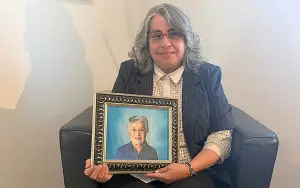
As the Visiting Nurse Association of the Treasure Coast’s Clinical Dietitian, Rebecca Schilling helps patients use nutrition as a key part of their recovery. Whether someone is returning home after a hospitalization, managing a new diagnosis, or rebuilding their strength, she works one-on-one with patients and their families to create personalized nutrition plans that fit their lifestyle and support their health goals.
Rebecca earned her Bachelor of Science in Dietetics and Nutrition from Keiser University and is a Registered Dietitian Nutritionist (RDN). Her experience spans hospitals, inpatient rehabilitation, home health, and long-term care. In addition to providing in-home nutrition counseling for VNA patients, she also serves as a Regional Registered Dietitian, overseeing nutrition services and quality improvement for skilled nursing facilities throughout Florida.
Q: What inspired you to become a nutritionist?
A: I’ve always been a foodie. I grew up in a family where some of our best memories were made in the kitchen, and I learned early on that food is about so much more than nourishment. It’s about family, culture, comfort, and celebration. The first part of my career was in food and beverage management, and I loved creating memorable dining experiences for people.
After having children, my perspective on food evolved. During pregnancy and throughout each stage of my daughters’ lives, I became increasingly interested in how nutrition impacts growth, health, energy, and long-term well-being. I also wanted to learn how to fuel my own body so I could stay healthy, strong, and active for my family. That passion naturally led me to become a Registered Dietitian.
Looking back, it was a seamless transition because both careers complement one another. My background in food and hospitality reminds me that eating should be enjoyable, while my training in nutrition helps me use food as a tool to improve health. That combination has shaped the way I counsel patients. Rather than striving for a “perfect” diet, I help people find a flexible, realistic way of eating that they genuinely enjoy. One that supports their health, vitality, and quality of life for years to come.
Q: What do you enjoy most about your work?
A: One of the greatest privileges of being a dietitian is meeting people during some of the most vulnerable moments of their lives. Whether they’re recovering from a serious illness, adjusting to a new diagnosis, or rebuilding their strength after a hospitalization, it’s an honor to be part of their care team and support them on that journey.
The most rewarding part is watching that transformation over time. Seeing patients regain their strength, confidence, and independence and transition from feeling vulnerable to feeling empowered. It is truly why I love what I do. Knowing that nutrition can play a meaningful role in helping someone get back to the life they enjoy is incredibly fulfilling.
Q: What do you wish more people understood about nutrition as we age?
A: One of the biggest things I wish more people understood is how important protein and staying active are as we age. Beginning around our 30s, we naturally start to lose muscle mass, and that process speeds up after illness, hospitalization, or periods of inactivity. Maintaining muscle isn’t just about strength. It’s essential for balance, preventing falls, healing, maintaining independence, and recovering more quickly when life throws us a curveball.
One simple tip I share with many of my patients is to include a source of protein at every meal and snack whenever possible. If you’ve recently been sick, had surgery, or spent time in the hospital, your body needs even more protein and calories to repair tissues and rebuild the muscle that may have been lost. Pairing good nutrition with even gentle movement, such as short walks or prescribed physical therapy exercises, can make a tremendous difference in helping you regain your strength, recover faster, and continue doing the things you love.
Q: What’s a misconception about nutrition that you often hear?
A: A common misconception is that simply “listening to your body” is always the best nutrition advice. While it’s important to pay attention to your body’s signals, our bodies don’t always tell us what we need. This is especially true during times of illness, recovery, or as we age. For example, after a hospitalization or during certain medical conditions, your appetite may decrease even though your body needs more calories, protein, and fluids to heal.
I encourage people to think of nutrition as something that evolves throughout life. Learning what your body needs during your current stage of life, maintaining consistent habits like eating balanced meals, staying hydrated, and being physically active, and remaining flexible as your needs change are all more important than following rigid rules or the latest diet trend. During times of acute illness or recovery, food becomes part of your treatment plan. Nourishing your body, even when you don’t feel like eating, can help support healing, rebuild strength, and speed recovery.
Q: What issues do you see a lot of our patients face and how do you provide care?
A: Two of the most common challenges I see are a poor appetite after an illness and not knowing how to manage a new medical diagnosis. Many patients feel overwhelmed when they return home, especially if they’ve been told to make significant changes to the way they eat.
For patients with a poor appetite, I encourage them to focus on eating small, frequent meals throughout the day rather than waiting until they’re hungry. Choosing foods that are high in protein and calories, staying hydrated, and eating when their appetite is best, even if it’s not at traditional mealtimes, can all help support recovery and rebuild strength.
When someone is learning to live with a new diagnosis, my role is to simplify the information and make it practical. I provide the education they need to understand how nutrition affects their condition, but more importantly, we look at their daily routine, food preferences, cooking abilities, support system, and any barriers they may face. Together, we develop realistic strategies that fit their lifestyle so healthy choices feel achievable and sustainable, not overwhelming. My goal is to give patients the confidence and tools they need to successfully manage their health long after our visit.
Q: What do you love most about working at the VNA?
A: I appreciate the VNA’s patient-centered approach. Seeing patients in their homes allows me to provide recommendations that are realistic, meaningful, and tailored to their everyday lives.
Q: What’s a meal you love cooking at home?
A: Grilled seafood with fresh vegetables and quinoa or wild rice. I enjoy preparing simple, flavorful meals that are both nutritious and easy to make.
Q: What do you enjoy doing when you’re not at work?
A: I enjoy spending time with my fiancé and two daughters, fishing, running, strength training, and reading. I am usually one of four places: on the water, in the kitchen, at church or in a healthcare setting in some capacity.